
22.09.2025

Mental health
07.08.2025

Anton Golovanov
Read 8 minutes
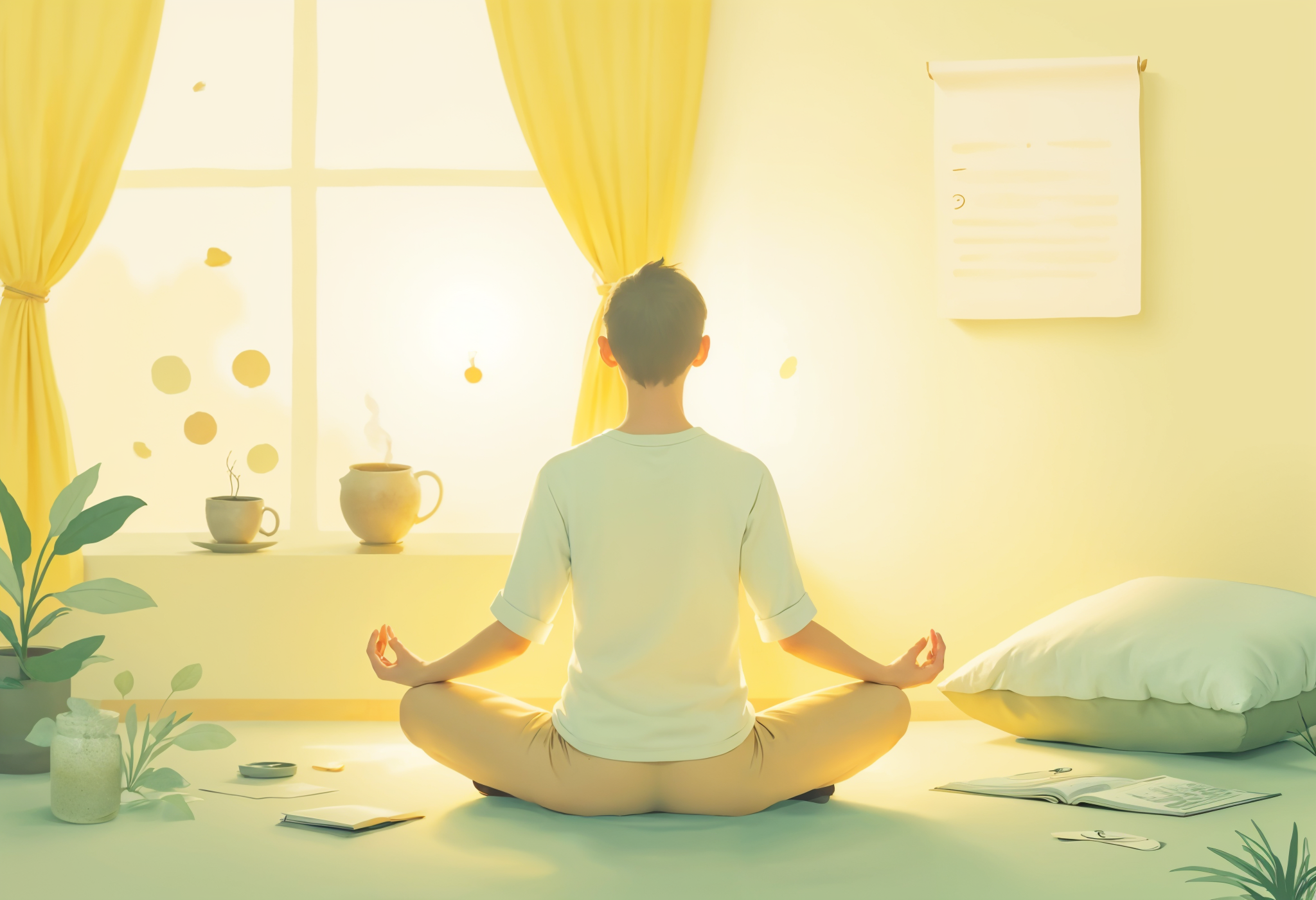
Meditation is an effective tool for restoring both physical and mental well-being. Psychology experts often consider it a form of cognitive training that enhances self-control and concentration. Regular practice can help you find inner harmony and peace. In this article, we will explore how meditation helps to overcome intrusive thoughts and which techniques are available for this purpose.
Thoughts are fragments of energy that move through consciousness, emerging from nowhere and disappearing into nothingness. However, some thoughts linger and cause distress over time. Intrusive thoughts may be associated with negative memories, feelings of guilt, or baseless fears. Their defining feature is that they keep replaying in one’s mind.
Due to reactivity—the tendency of a person to respond to stimuli—intrusive thoughts have a negative impact on well-being:
Chronic stress, depression, anxiety, fear, or past traumatic experiences can contribute to their occurrence.
The essence of meditation is to focus the mind on a specific object, thought, or activity, helping to stabilize the psycho-emotional state. It aids in relaxation, stress relief, and the normalization of the autonomic nervous system.
Research has shown that meditation reduces the activity of the amygdala, the brain region responsible for stress and fear. This helps alleviate intrusive thoughts, reduce anxiety, and improve self-control.
There are various meditation practices that help manage thoughts. Each has its own benefits and unique features. Try different practices and choose the one that suits you best.
Breathing Meditation
If you are struggling with intrusive thoughts, try breathing meditation. It can help you feel calm and relaxed. The advantage of breathing meditation lies in its accessibility and effectiveness, as it helps relieve stress and anxiety, balance emotional states, and improve concentration.
Steps to follow:
This practice not only increases mindfulness but also slows the heart rate and reduces cortisol levels (the stress hormone). Start with five minutes and gradually extend the duration.
Thought Observation Meditation
This practice helps in recognizing intrusive and other thoughts without becoming immersed in them or wasting energy fighting them.
Steps to follow:
This meditation helps reduce the negative impact of intrusive thoughts through detachment, enhances mindfulness and emotional resilience, and eliminates destructive self-criticism. Start with 5–10 minutes and gradually increase the duration.
Body Scan Meditation
This practice involves gradually scanning your body and focusing attention on different areas.
Steps to follow:
Benefits of body scanning:
Beginners can start with 10-minute sessions, extending to 20–30 minutes for complete relaxation.

Mantra Meditation
This is one of the most powerful techniques for eliminating intrusive thoughts and achieving inner harmony. It involves repeating a word, phrase, or sound to enhance focus and enter a state of peace.
Steps to follow:
Sound vibrations positively affect the body and brain, calming the nervous system. Begin with 5–10-minute sessions and gradually extend them.
Try meditation now and feel the surge of strength!
Try in the app
How to Start Meditation?
To begin meditation, choose an optimal time when you won’t be disturbed. It is also important to create a suitable environment—while no special decor is necessary, removing distractions is beneficial.
Find a comfortable position—either sitting on a chair or cross-legged on the floor. Set a timer and focus on your breath and bodily sensations. Observe your thoughts without trying to control them.
How Long Should You Meditate?
The duration of meditation varies individually. Studies have shown the effectiveness of a 10-minute session, but it is essential to consider personal comfort and experience level. Initially, 5–10 minutes will suffice, with the possibility of increasing duration over time. The key is proper technique and experiencing results such as relaxation and tranquility. If you don’t notice immediate results, keep practicing—it will improve over time.
How to Make Meditation a Habit?
Meditation can help eliminate intrusive thoughts only with regular practice. Meditating for five minutes daily is more beneficial than a half-hour session once a week. To develop a habit, choose a fixed time, such as before bed or another period when you won’t be distracted. Setting reminders on your phone or using our app can help maintain consistency. Keeping a journal to record your meditation experiences will track progress and maintain motivation.
Common Meditation Mistakes and How to Avoid Them
Початківці найчастіше стикаються з такими помилками:
What If You Can’t Relax During Meditation?
Don’t force yourself. Start with short sessions and gradually extend them. Create an environment free from distractions. If one technique doesn’t work, try another.
In our app, you’ll find various meditation practices to experiment with and choose the best fit for you!