22.09.2025

Meditations
19.09.2025

Anton Golovanov
Read 6 minutes
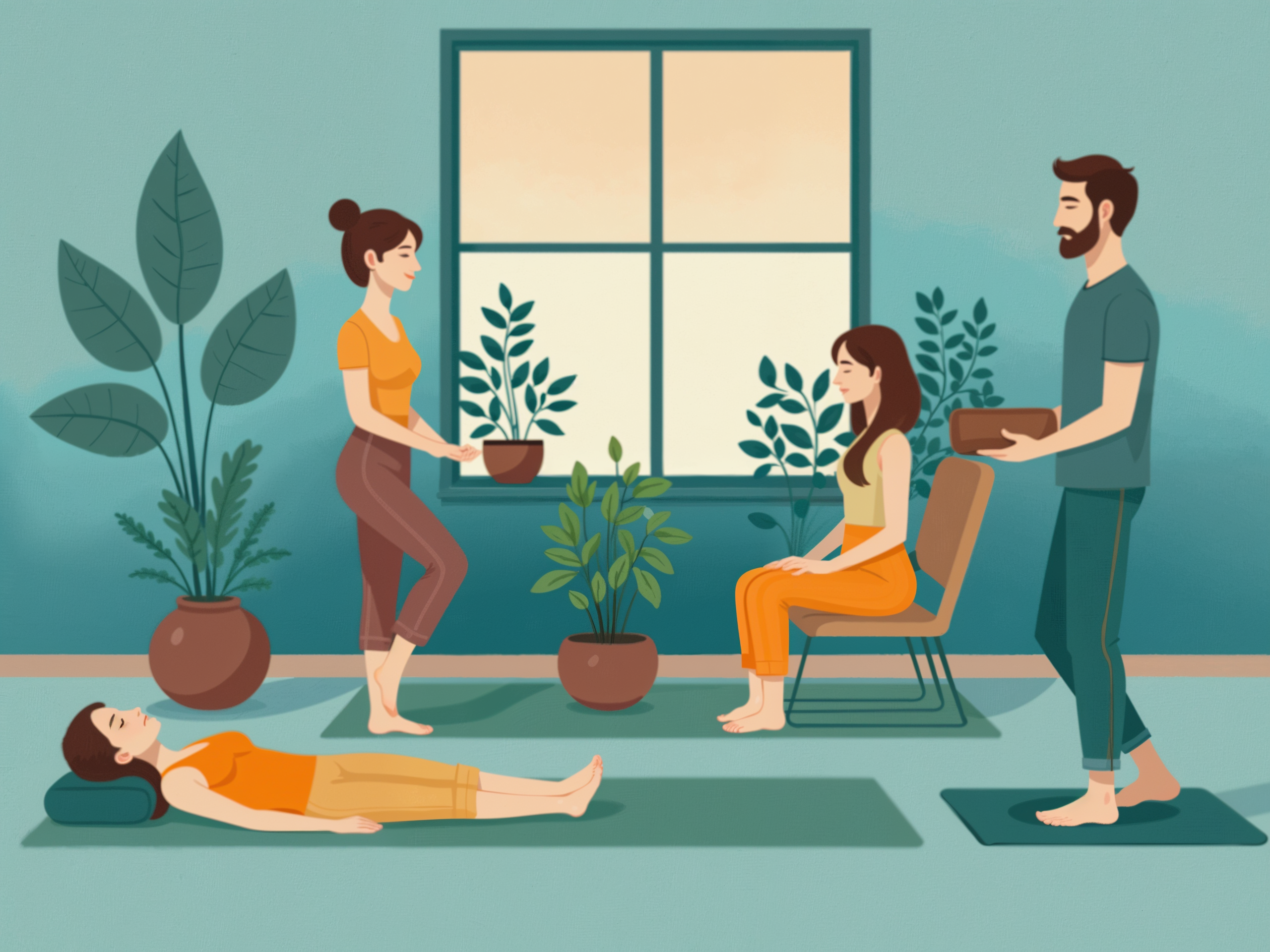
The position of your body during meditation affects concentration, breathing, and overall comfort. Despite common belief, meditation is not limited to the lotus position. There are many other postures that allow you to relax during practice. The key is to choose a position where your spine remains straight and your breathing is unrestricted. A comfortable posture helps prevent unnecessary tension and enhances focus.
Choosing the right meditation posture can help achieve the desired results. It is essential that the position allows relaxation and concentration rather than creating discomfort and strain. Meditation can be practiced while sitting, lying down, or even standing.
Meditation While Lying Down
Lying down is an excellent posture for relaxation-based meditation and body awareness techniques. It is recommended to practice on the floor using a yoga mat or a thick blanket. Lie flat on your back in a comfortable position. Relax your legs and keep them slightly apart—about shoulder-width. Place your arms alongside your body with palms facing upward. If you experience tension in your lower back, try placing a pillow or bolster under your knees. A small pillow under your head can also add comfort.
Meditation While Sitting
Sitting meditation is ideal for maintaining focus and mental clarity. Choose a comfortable chair or a firm couch. Sit so that your hips and thighs are fully supported by the seat, with your feet flat on the floor. This helps prevent unnecessary strain. Your spine should remain straight throughout the practice but not rigid. Keep your shoulders and neck relaxed. Imagine a thread gently pulling the crown of your head upward, helping you maintain an upright but comfortable posture.
Try meditation now and feel the surge of strength!
Try in the app
Meditation While Standing
Standing meditation helps increase body awareness and improve spatial perception. To achieve the best effect, stand in a stable position. Keep your feet shoulder-width apart and distribute your weight evenly. Maintain a straight but relaxed posture, with your head naturally aligned upward and your shoulders down and loose. If you feel discomfort in your lower back, slightly adjust your pelvis to relieve pressure.
Walking Meditation
Walking meditation combines mindfulness with movement, making it an excellent option for those who find it challenging to remain still for long periods. Choose a quiet place with minimal distractions—a park, square, forest path, garden, courtyard, or even a spacious indoor corridor. Start walking slowly, paying attention to each step. Feel how your feet make contact with the ground and how your body weight shifts. Keep your back straight, shoulders relaxed, and breathing deep and natural. Focus on sensations in your legs, the rhythm of movement, or simply observe your surroundings without analyzing them. This practice helps calm the mind, relieve tension, and bring awareness to the present moment.
There is no single “ideal” meditation posture. The best position is the one that feels most comfortable for you. Some people prefer sitting on their knees, while others find standing more suitable. Regardless of which option you choose, keep these key principles in mind:
If you are new to meditation, experiment with different postures. Try sitting today and lying down tomorrow. You may also find using cushions or mats helpful for added comfort. Pay attention to your sensations in different positions to understand what works best for you. After a few weeks of regular practice, you will naturally develop your own meditation technique.
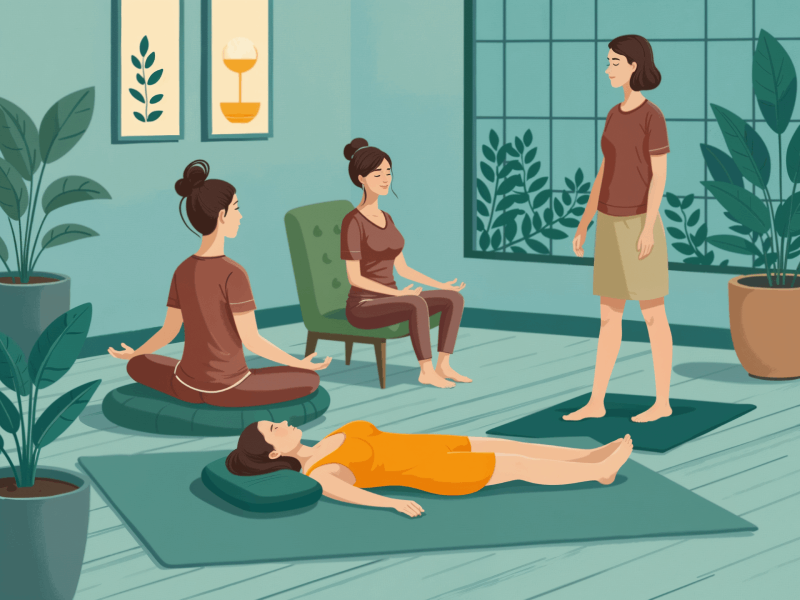
Sometimes, choosing a meditation posture can be challenging for beginners. This is often due to mistakes that new practitioners make in their initial sessions. Here are some common issues and how to resolve them:
Regular and consistent practice will help you start meditation easily and achieve meaningful results without unnecessary effort. Taking care of your comfort enhances your meditation experience and makes it more enjoyable. Our app can be a reliable guide in your journey, offering effective meditations that you can practice at your own pace and style.