22.09.2025

Meditations
22.09.2025

Anton Golovanov
Read 6 minutes
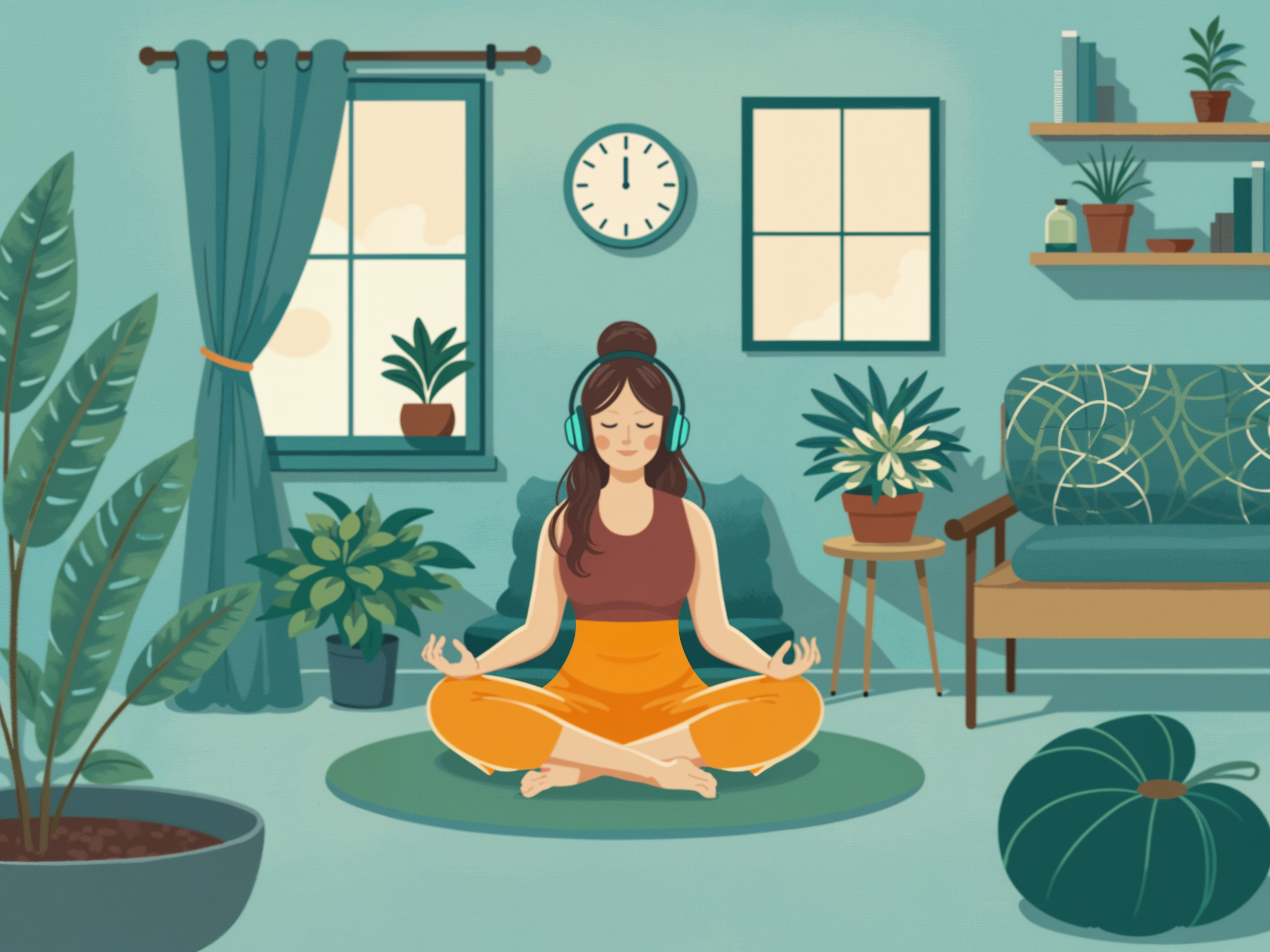
For those who have never meditated, it may seem that meditation is difficult, time-consuming, and not for everyone. However, these concerns fade as soon as you begin. Just a few simple steps, and you will gain your own experience and start feeling the first positive changes. Today, we will debunk the most common myths about meditation that persist in society.
In reality, the lotus position is just one of many body postures for meditation. You do not need flexibility or physical endurance to start meditating. Most meditation techniques, both for beginners and advanced practitioners, can be performed in any comfortable position. The only requirement is to try to keep your back straight. You can sit, lie down, or even move while meditating.
Some types of meditation do require deep immersion for extended periods. However, most daily meditations do not take much time. For example, mindfulness meditation, breath-focused meditation, or body scan meditation can be practiced in just 5–15 minutes a day.
One of the unique aspects of meditation is its versatility. Some people practice for spiritual growth, while others do it to achieve inner peace. Meditation helps improve concentration and even release physical tension. Therefore, it should not be viewed from just one perspective. If your goal is spiritual development, that’s great. However, meditation can also be practiced for entirely different reasons—it’s up to you.
Unfortunately, there is no single tool that can solve all problems. Usually, resolving life’s difficulties requires a comprehensive approach, effort, and regularity. Meditation is not a “magic wand.” However, it is a tool that gradually initiates changes on multiple levels, from surface-level improvements to deep transformations.
No, meditation is not about escaping reality. On the contrary, it helps calm the mind, become aware of emotions, and learn to live in the moment. Meditation develops the ability to stay “here and now,” focus on the present moment, and experience life more mindfully. Instead of avoiding problems, meditation teaches you to respond to them calmly and find inner balance.
Another common myth that often discourages beginners is the idea that meditation requires an elaborate setup. Looking at pictures of meditation, we often see “perfect” spaces—someone sitting in a picturesque location, using cushions, candles, or singing bowls. However, all these accessories are not mandatory. To start meditating, all you need is solitude and 5–15 minutes of your time. Later, if desired, you can enhance your practice with additional elements to amplify the effect.
Try meditation now and feel the surge of strength!
Try in the app
This is false—meditation’s effectiveness has been scientifically proven multiple times. As the practice gained popularity in Europe and America, research on its psychological and physiological effects increased. Studies have confirmed that regular meditation positively impacts various areas of the brain. Systematic practice improves key mental processes, including memory, attention, thinking, and imagination.
Additionally, meditation has been proven to stabilize the psycho-emotional state by reducing stress and anxiety levels. Specific types of meditation, such as mindfulness, have demonstrated effectiveness in working with PTSD (post-traumatic stress disorder). There is also evidence of physiological benefits—regular meditation practice strengthens the immune system and improves sleep quality.
At first glance, meditation might seem complicated. It may appear to require a lot of time, special accessories, or an instructor. However, there are many meditation techniques that are easy for beginners. For example, breath observation or body scan meditation can help you start meditating effortlessly.
Initially, it might be challenging to maintain focus, which is often perceived as the difficulty of meditation. However, with each session, concentration skills improve, and this issue disappears. All you need is regular practice, willingness, and a bit of patience.
No, quite the opposite. One of meditation’s effects is balancing the psycho-emotional state. The practice helps calm the mind and regulate the flow of thoughts. Meditation can be started in any state, even when feeling stressed or anxious. Regular practice helps achieve inner balance and harmony.
To ensure that meditation is not a waste of time, it is essential to define your goals clearly and choose suitable techniques. This way, meditation will bring maximum benefits and noticeable results. Our app can help you select the meditation technique that best fits your needs. After just a few weeks of practice, you will be able to experience its effects firsthand.