22.09.2025

Meditations
19.09.2025

Anton Golovanov
Read 5 minutes
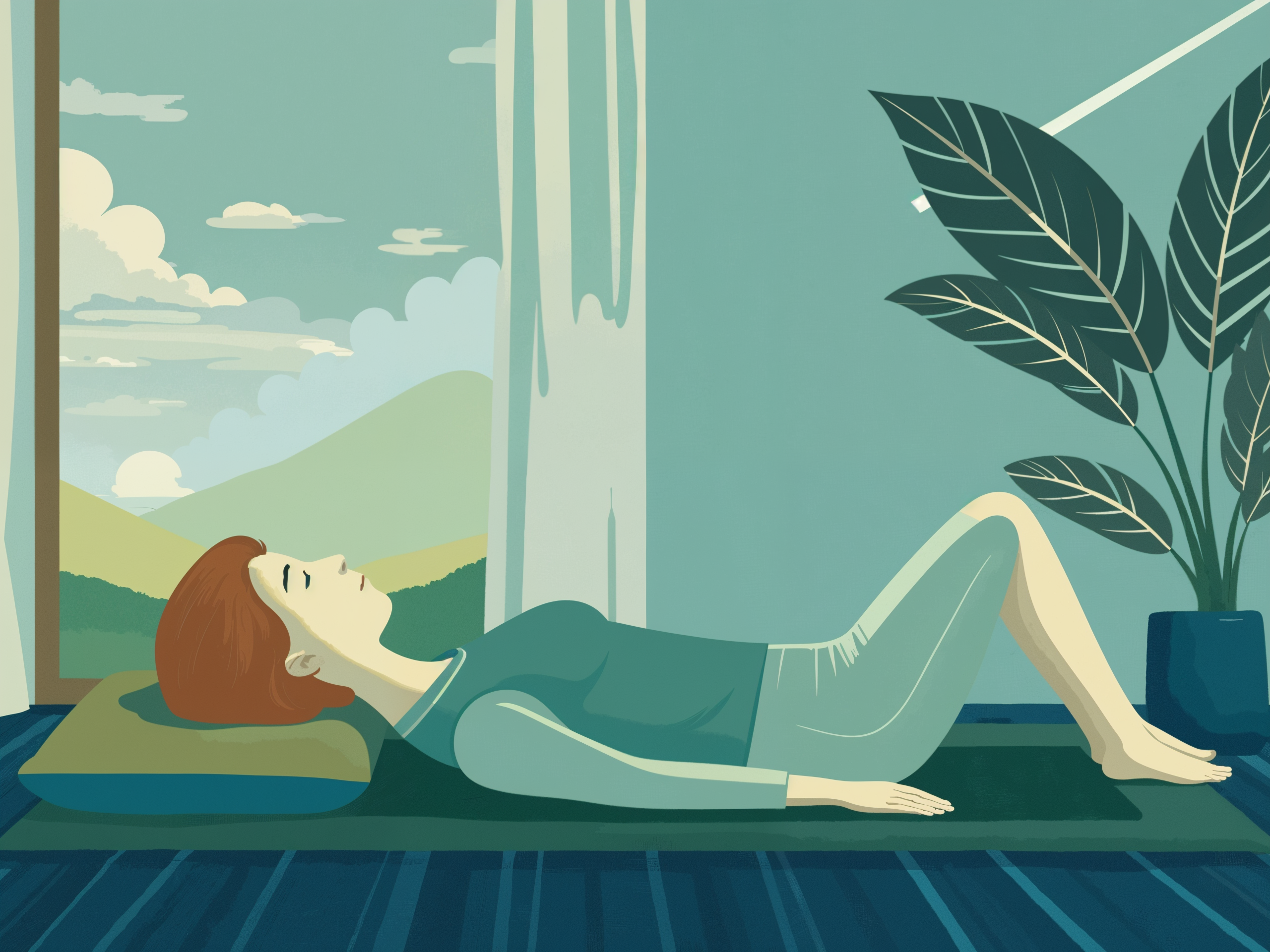
When we think of meditation, we often picture someone sitting in the lotus position amidst a picturesque landscape. However, this is a common myth that has taken root in society. In reality, meditation can be practiced in various settings, and the posture can vary. You can meditate while sitting on a chair, cross-legged, standing, or, of course, lying down. The best posture depends on the type of meditation and your personal goals. However, meditating while lying down is particularly effective for achieving deep relaxation.
Our bodies naturally associate lying down with rest and relaxation. In this position, it is easier to sense areas of tension and reach a state of calm more quickly. With regular practice, lying down can also become one of the most effective postures for deep mindfulness. The key is to adopt the correct posture to avoid unnecessary strain. To meditate lying down, follow these steps:
It is important to maintain symmetry in your posture. Your arms and legs should be positioned evenly relative to each other, and your head should rest straight.
Beginners may find themselves unintentionally falling asleep during meditation, especially if practicing in the evening after a long day. This is not a problem—it actually indicates deep relaxation. Over time, as you become accustomed to the process and learn to maintain mindfulness, falling asleep will happen less frequently unless that is your goal.
Lying down is particularly well-suited for relaxation-focused meditation techniques, such as:
I improve my mental state:

Lying down meditation is an excellent way to calm the mind and body. If you adopt the correct posture and focus on the practice, you will experience its benefits quickly. Some key advantages of this meditation posture include:
Physical relaxation in a lying position naturally reduces mental chatter and helps clear the mind. Deep breathing and relaxation activate the parasympathetic nervous system, which helps lower anxiety and stress levels. For these reasons, we highly recommend lying down meditation, especially for beginners—it is simple yet incredibly effective. Our app can help you find the best practices to suit your needs.