15.09.2026

Sleep
05.06.2026

Olha Ponomarenko
Read 9 minutes
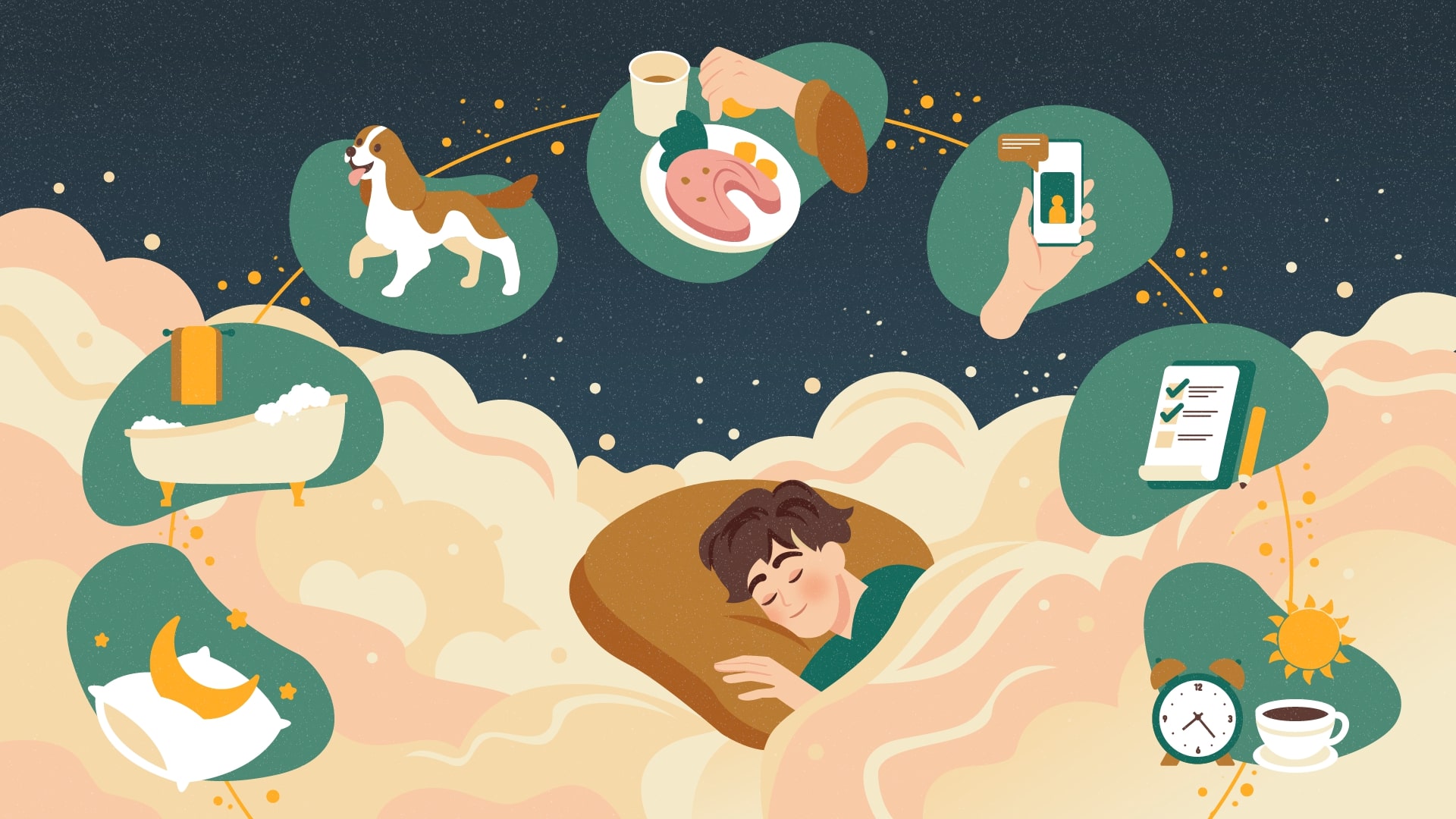
According to recent studies, 35 to 50% of the adult population worldwide has sleep problems. Insomnia, shallow sleep, and nighttime awakenings are common among many people. Sleep disturbances inevitably affect our lives. This is due to the exhaustion of the nervous system and the lack of quality, deep sleep. As a result, we feel sleepy and irritable, become emotionally unstable, and our overall well-being deteriorates.
One of the most effective and safe tools for combating insomnia and other sleep disorders is meditation. Regular practice helps calm the nervous system and promotes the activation of the body’s recovery processes. Simple techniques relieve excessive tension on the physical, emotional, and cognitive levels. This allows you to calm down and regulate the processes of activity and rest in accordance with natural biological rhythms.
Dealing with insomnia begins with identifying the causes that disrupt sleep patterns. Sleep problems arise when the body loses its ability to relax and recover. The most common cause is chronic stress, which the body and mind cannot cope with. Constant tension, emotional overload, and a stream of thoughts before bedtime activate the nervous system, and the body cannot enter a state of rest.
That is why overcoming insomnia requires a comprehensive approach. On the one hand, we look for and eliminate sources of stress that prevent us from recovering effectively. On the other hand, we do everything we can to help the body relax and get rid of unnecessary tension. And, of course, we do not forget to consult specialists if necessary to rule out medical causes of insomnia.
I improve my mental state:

Stress and anxiety
High levels of stress and anxiety are the most common causes of sleep problems. Even in the evening, we remain tense, replaying thoughts about work, money, relationships, or health. Sometimes it seems that this flow is impossible to stop. Because of this, it is difficult to fall asleep, and sleep becomes shallow and restless. In the morning, we wake up tired and irritable. The day begins with stress — and so the cycle continues. Stress causes insomnia, and insomnia increases stress.
When we are constantly in a state of tension, the nervous system becomes exhausted. It becomes more difficult to relax and get quality rest. Therefore, it is important to pay attention to your routine and the quality of your rest as early as possible, and, if necessary, help your body cope with tension. Meditation is an effective tool for this. Simple practices trigger natural relaxation mechanisms and help you calm down. Even short, regular meditations can significantly improve your inner state, replacing anxiety and tension with a sense of calm and harmony.
Incorrect daily routine
The human nervous system likes predictability and stability. One of the mechanisms that provide this is circadian rhythms. This biological clock regulates our sleep and activity cycles. If this rhythm is disrupted, the body no longer understands when to rest and when to work. As a result, we find it difficult to fall asleep, our sleep becomes shallow, and it is difficult to wake up in the morning, even after a long sleep.
That is why doctors and other health professionals actively emphasize the importance of a daily routine. Adhering to a clear rest schedule is one of the simplest and most basic conditions for full recovery and healthy sleep. By going to bed at the same time every night, we signal to our body that it is time to produce melatonin. This hormone promotes easy falling asleep and makes sleep deeper.
Excessive caffeine consumption
A compound called adenosine is responsible for the feeling of fatigue in our body. By consuming caffeine, we block the action of this substance and lose the ability to adequately assess our own level of fatigue. This natural stimulant, found in coffee, some teas, energy drinks, and even chocolate, can play a nasty trick on our bodies.
Caffeine is eliminated from the body in 5 to 10 hours (depending on the characteristics of the metabolism). Therefore, even one cup of this aromatic drink, consumed at 2-4 p.m., can negatively affect the quality of sleep in the evening.
Use of electronic devices
The screens of smartphones, tablets, and laptops emit blue light. This spectrum suppresses the production of melatonin, a hormone that regulates falling asleep and sleep cycles. Therefore, even after watching a video or reading the news for twenty minutes, it is difficult for us to get ready for rest. To avoid these problems, it is worth giving up the use of gadgets at least 1.5-2 hours before bedtime.
Medical reasons
In some cases, the causes of sleep disorders can be medical. Certain diseases of the endocrine system (such as hyperthyroidism), autoimmune processes, and chronic pain (particularly arthritis) can cause insomnia. The quality of sleep is also affected by the medications we take on a regular basis. Some drugs, such as antidepressants or steroids, have side effects in the form of insomnia. Depression, anxiety disorders, and asthenia are also often accompanied by insomnia.
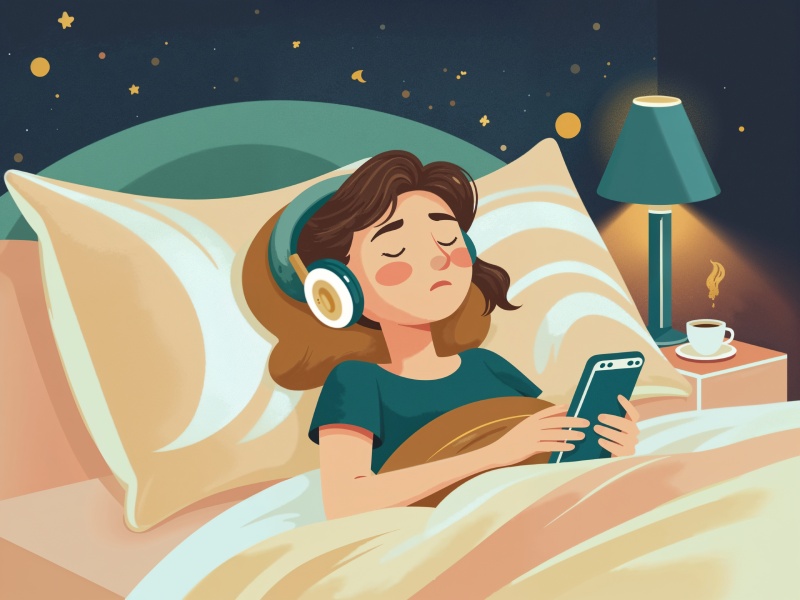
The variety of effective meditation techniques allows everyone to choose exercises for easy falling asleep and deep sleep according to their needs. In our app, you will find a variety of practices for relaxation on the physical, psycho-emotional, and cognitive levels. Practicing them regularly will be your first step in combating insomnia and improving your sleep. Integrate the exercises into your evening routine to achieve noticeable results in just 2-4 weeks of regular practice.
Mindfulness meditation
This practice, which focuses on observing what is happening “here and now,” is highly effective in solving sleep problems. It helps to stop the flow of thoughts, relax the body, and keep your attention in the present moment. You just need to observe your breathing, thoughts, and emotions without trying to change or control anything. As a result, you will feel your anxiety decrease and your body gradually relax.
Guided meditation
Guided meditation is performed to an audio recording with a voice that gently guides you to relaxation. This technique is especially useful for insomnia when it is difficult to calm your thoughts on your own. The advantage of guided meditation is its clear structure, which helps you focus, reduce tension, and gradually immerse yourself in a state of calm. It is ideal for those who are just starting to meditate.
Breathing exercises
Breathing techniques are a simple but effective way to calm the nervous system before bed. Slow, rhythmic inhalations and exhalations activate the parasympathetic nervous system. This lowers cortisol levels and helps the body enter a state of rest. One effective practice is the 4-7-8 breathing technique: inhale for 4 seconds, hold for 7 seconds, exhale for 8 seconds. It is important to count the seconds slowly and evenly. For those who find this exercise difficult, there is a simpler option. Inhale through your nose and exhale through your mouth, making the exhalation longer than the inhalation.
Body scan meditation
Body scan is a technique in which attention is moved sequentially through all parts of the body. You focus on your feet and gradually move up to the top of your head. Pay attention to the sensations in each area: tension, warmth, pulsation. Gradually relax your body. This practice helps you switch from thoughts to bodily sensations, reduce nervous excitement, and reconnect with yourself. It naturally prepares you for healthy and deep sleep.
Try meditation now and feel the surge of strength!
Try in the app
An article from Harvard Medical School presents a study that showed that regular mindfulness practice can significantly improve sleep quality in people suffering from insomnia. The study involved 49 people aged 55 and older with sleep problems. Some underwent a mindfulness program, while others underwent a basic sleep training program. After 6 weeks, the mindfulness meditation group showed a significant improvement in sleep quality and a reduction in symptoms of insomnia, fatigue, and depression. This confirms that mindfulness practice can be an effective non-pharmacological tool for combating sleep disorders, especially in older adults.
Experience the positive effects of meditation, which activates natural processes of relaxation and recovery. Choose techniques in our app and integrate them into your routine.