05.06.2026

Sleep
03.06.2026

Olha Ponomarenko
Read 7 minutes

The modern pace of life, constant stress, and environmental problems negatively affect the quality of our sleep. According to statistics, one in six people on the planet suffers from insomnia, which leads to daytime sleepiness, irritability, and decreased productivity. That is why the issue of healthy sleep is so relevant.
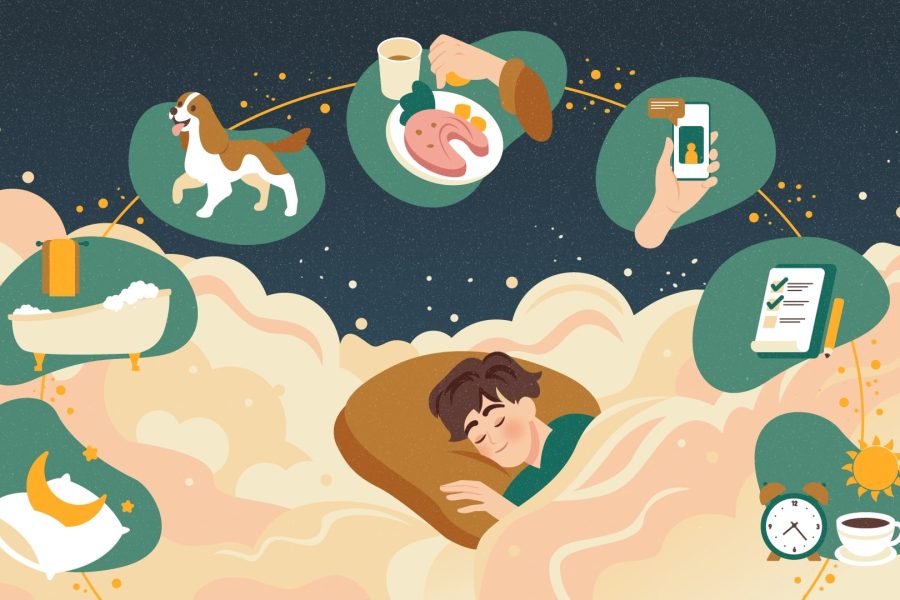
Bedtime rituals can help create the conditions for quality and restful sleep. This could be a warm shower, a cup of herbal tea, and, of course, meditation. Create your own bedtime ritual that will help you teach your body and brain to switch from active mode to rest mode.
Stress and calmness in our body are regulated by two parts of the autonomic nervous system — the sympathetic and parasympathetic nervous systems. When the sympathetic nervous system is activated, stress hormones — cortisol and adrenaline — are released into the blood. This leads to an increased heart rate, rapid breathing, and muscle tension. In such an excited state, it becomes extremely difficult, and sometimes impossible, to fall asleep.
Sometimes our body needs help to switch from an active state to a calm one (to activate the parasympathetic nervous system). Meditation before bedtime is the “key” that returns the body to a state of calm and balance. Regular evening practice will help prevent nervous system exhaustion, restore sleep quality, and form a stable habit of self-regulation.
The calming and stabilizing effect of meditation has been confirmed by scientific research. Practices activate the parasympathetic nervous system, which is responsible for relaxation, lowering heart rate, and slowing breathing. These processes prepare the body for sleep. People who regularly practice mindfulness meditation fall asleep faster, wake up less often at night, and generally have better sleep quality.
Thus, meditation is a natural and effective tool for stabilizing one’s psycho-emotional state. Meditation techniques help the body and brain transition from a state of tension to a phase of recovery — and this is what makes it an ideal mechanism for falling asleep.
A bedtime ritual helps us calm down and prepare for sleep. By repeating the same actions every evening, we signal to our body that it is time to rest. Such a ritual not only facilitates the process of falling asleep, but also helps to relieve the tension accumulated during the day, calm the mind, and give a feeling of inner peace. And an important part of the evening routine is meditation.
Try meditation now and feel the surge of strength!
Try in the app
Step 1: Determine the place and time
For a pronounced and lasting effect, it is worth performing evening rituals for falling asleep at the same time every day. For example, meditating 20-30 minutes before bedtime will give you the maximum relaxation effect and make the transition to rest easy and natural. You can practice in bed, sitting on a chair, or on a mat on the floor. We recommend doing the exercise right in bed.
Step 2: Choose a meditation technique
Choose a meditation technique that resonates with you. We recommend paying attention to three basic techniques: breathing meditation, body scanning, and visualization. It only takes 10-15 minutes before bedtime to try each practice and choose the one that suits you best.
Focusing on your breathing will help you shift your attention from cognitive processes to bodily ones. By observing your own inhalations and exhalations, you naturally calm down and activate relaxation processes.
Body scanning is a practice that helps relax muscles, reduce nervous system arousal, and stabilize the pulse. The feelings of inner peace and security that arise after performing this practice promote rapid sleep onset and quality rest.
Visualization practice is aimed at creating mental images that give us a sense of harmony and relaxation. Because the brain perceives these “pictures” almost as reality, we relax and release tension.

Step 3: Integrate it into your ritual
To get the most benefit and positive effects from meditation, integrate it into your routine. Let it become part of your personal rituals — a sequence of actions performed daily. Everyone has their own evening routine. Some people can’t fall asleep without a warm shower and music. For others, it’s important to drink a cup of nice tea and read a few pages of a book. Others prefer yoga or stretching.
Whatever your evening ritual may be, we recommend ending it with a short meditation to make the transition to sleep as easy and quick as possible.
The evening rituals you create for yourself should be enjoyable and relaxing. If a certain activity causes tension, it is better to replace it with another. The most important thing is that you feel good and calm.
Additional recommendations for better sleep
If you have trouble falling asleep, there are a few more things to consider. Simple actions will help you prepare for sleep, create the most comfortable conditions for rest, and help you avoid unnecessary stress:
We recommend using our app for meditation. Here you will find not only a variety of techniques and detailed instructions for exercises, but also all the visual and audio materials you need for your practice.