15.09.2026

Meditations
16.05.2026

Olha Ponomarenko
Read 7 minutes

In everyday life, we often encounter various stressors. Some of them can throw us off balance. This often leads to uncontrolled reactions that negatively affect us and our environment. Mindfulness meditation is an effective tool for harmonizing your emotional background and controlling your reactions.
Mindfulness teaches you to focus on the present moment without judgment or analysis. Thanks to mindfulness skills, we can experience life to the fullest while remaining calm and confident. Mindfulness helps us notice emotions before they become intrusive and respond to them consciously rather than impulsively. As a result, we are less susceptible to stress, do not get stuck in anxious thoughts, and restore our emotional balance more easily.
Our emotions and feelings influence our mood, decisions, and how we respond to difficult situations. The skill of being aware of our reactions helps us to understand ourselves better and, at the same time, avoid uncontrolled reactions and actions. This skill can be developed and improved through simple mindfulness practices. Here are 6 basic techniques that are suitable for beginners and experienced practitioners alike.
Mindful breathing
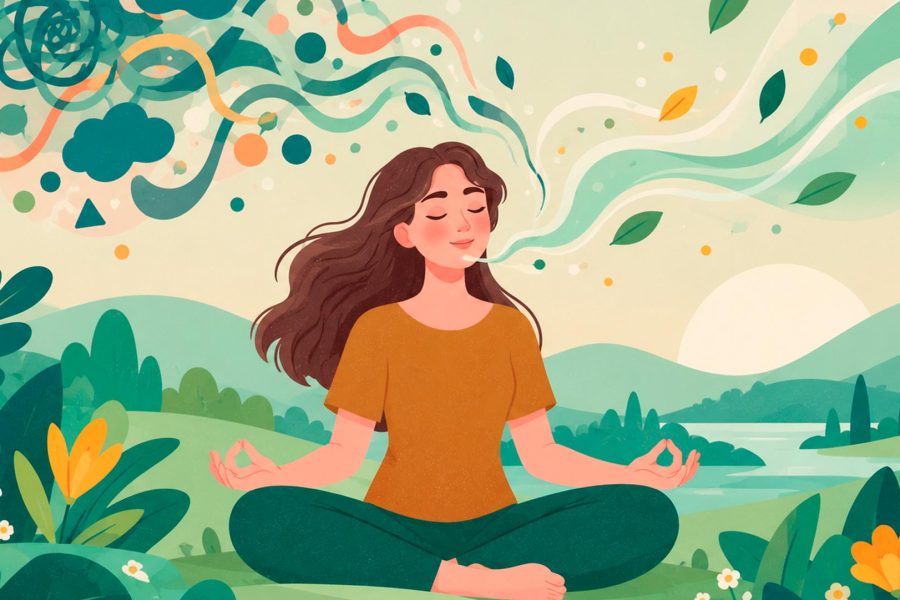
Breathing is the basis of all processes that occur in our body, including the nervous system. Techniques aimed at concentrating on inhalation and exhalation help to quickly stabilize your emotional state and clear your mind of intrusive thoughts. To perform:
This technique helps to reduce stress and anxiety and activates the parasympathetic nervous system, which is responsible for relaxation. This practice is special in that it can be performed at any time, even while you are working.
Mindful observation of thoughts
Mindful observation of thoughts involves perception without judgment or trying to change anything. The essence is to become an “outside” observer of your cognitive processes. To perform:
Do not try to analyze your thoughts or change them — just observe. This allows you to distance yourself from your thoughts and avoid automatic impulsive reactions. The advantage of this practice is its ability to develop emotional stability and reduce stress levels. In general, this skill allows you to learn to live more consciously.
I improve my mental state:

Mindful listening
When practicing mindful listening, we learn to be present in the here and now. The technique involves focusing your attention on sounds and concentrating only on them. To perform the exercise:
In our app, you will find a variety of audio recordings for practicing mindful listening. They help you dive deeper into the process and relax. Even a short practice can calm the nervous system and help restore clarity of mind and focus.
Practicing self-compassion
If you notice that there are more “negative” emotions in your life than positive ones, pay attention to the practice of self-compassion. It is aimed at developing kindness and understanding towards yourself in difficult moments of life. During the practice, you learn to notice and accept your emotions and give yourself support. To perform the technique:
The technique aims to reduce internal criticism and anxiety levels. Self-compassion helps improve emotional stability and develop self-confidence.

Body scan
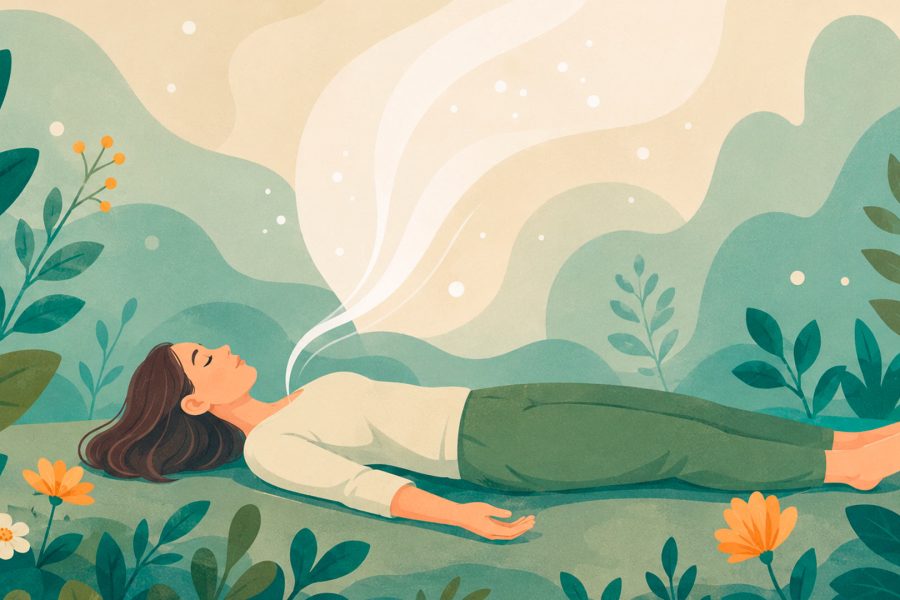
Physical and psychological practices, such as body scanning, are effective for quickly calming down and creating balance between the physical and mental. In this technique, it is important to simply observe bodily sensations without trying to change or evaluate them. To do this:
This practice allows you to effortlessly return to a state of presence “here and now.” It also helps to identify and relax tense areas of the body. Meditation reduces stress levels, has a positive effect on well-being, and develops self-awareness.
Mindfulness meditation
One of the basic practices for harmonizing your state and developing emotional management skills is mindfulness meditation. You focus your attention on everything that is happening to you at the moment: thoughts, emotions, sensations in the body. As in previous practices, you need to remain an outside observer, trying not to interfere. To perform the technique:
This simple practice helps you develop an important skill — living mindfully. With its help, you improve your concentration, emotional stability, and resistance to stress.
All of these practices help you learn to be aware of your emotions and manage them. Regular practice of these techniques allows you to achieve not only immediate changes, but also lasting, significant results. The main thing is to practice regularly and move forward in small steps, but systematically. Our app will come in handy for this. With it, you can easily integrate meditation into your life.