
15.09.2026

Meditations
09.05.2026

Olha Ponomarenko
Read 6 minutes

Scientific studies have repeatedly confirmed the effectiveness of meditation in reducing stress and anxiety, as well as improving memory and attention. It promotes emotional stability and inner peace. Despite the ancient origins of most of the techniques practiced today, science has only recently begun to actively study their effect on the nervous system.
Modern research methods and the latest technologies provide a better understanding of how meditation affects the human brain. Scientists have been able to prove that regular practice not only affects the state at the moment of its performance, but also triggers a series of positive structural changes. Brain research shows that meditation is a reliable tool for achieving noticeable and lasting positive changes.
Neuroplasticity is the ability of our brain to change and build new neural connections under the influence of life circumstances or regular practices. Thanks to this ability, the brain, like the body, can be “trained.” This process is the basis for learning any new skills and even recovering from injuries.
During meditation, deep concentration on certain objects activates processes related to neuroplasticity. The brain is freed from excessive external influences and focuses on what is happening here and now. This contributes to the formation of new neural connections, which are transformed into mindfulness skills.
This explains the positive effect of regular meditation on cognitive functions. By practicing, we improve our ability to concentrate, manage our emotions, and make effective decisions. In addition, during practice, the activity of the amygdala — the center of anxiety and fear — decreases. This makes us calmer and more balanced in stressful situations.
Research conducted by scientists in Australia has confirmed the positive effect of meditation on the volume of gray matter in the human brain. It is responsible for our ability to concentrate and helps improve attention and memory. Gray matter also plays a role in maintaining emotional stability. This means that when we meditate, we not only calm down, but also literally change the structure of our brain.
Try meditation now and feel the surge of strength!
Try in the app
During meditation, various areas of the brain are activated that are responsible for concentration, memory, self-control, emotional regulation, and other mental processes and functions. By studying the activity of the central nervous system during practice, scientists have discovered changes in areas such as:
The activity of the prefrontal cortexhas a positive effect on the ability to concentrate. Meditation strengthens the connections between the prefrontal cortex and other areas of the brain, promoting better control over emotions and impulses. As a result, we become more focused, calm, and “collected.”
The involvement of the hippocampus in the meditation process has effects such as improved memory, learning ability, and reduced stress and anxiety levels. Regular practice contributes to an increase in the volume of the hippocampus and regulation of its functioning.
The effect of reduced reactivity to stressors is due in part to decreased activity of the amygdala during meditation. It plays a key role in determining how intense and prolonged our response to stress will be.
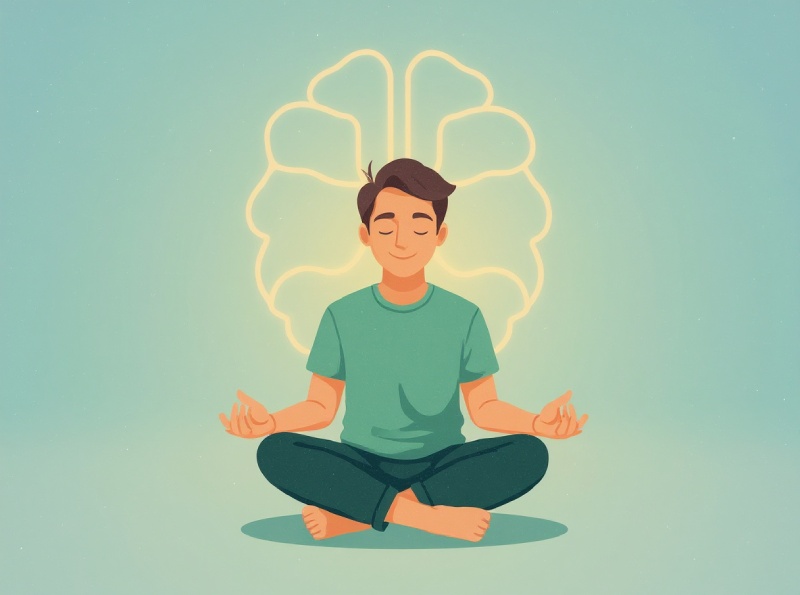
During mindfulness practices and other techniques, the frontal lobes of the brain are also involved. Meditation reduces their activity, promoting overall relaxation and better concentration. The intensity of processes in the frontal lobes, which are responsible for spatial perception, also decreases. This makes it easier to focus your attention inward and stay focused for longer.
During meditation, the processing of information from the outside world slows down. This effect occurs due to a decrease in the activity of the thalamus. It transmits sensory information to other parts of the brain more slowly, allowing the nervous system to “rest” and us to pay attention to what is happening here and now.
Improvements in cognitive function through meditation are a natural and logical consequence of positive changes in the brain. Regular practice enhances concentration, improves memory, develops analytical thinking, and increases the speed of information processing. It also increases stress resistance, which helps with decision-making in difficult situations. All of this has a positive effect on productivity, learning ability, and overall quality of life.
Today, the scientific basis for meditation is convincing enough to consider the practice an effective tool for internal change. All that remains is to find the meditations that suit you best and integrate them into your daily routine. This can be done conveniently and easily with our app. There you will find all the materials you need to take your first steps in meditation and gradually deepen your knowledge and skills in this area.