15.09.2026

Meditations
11.05.2026

Olha Ponomarenko
Read 11 minutes

Meditation is a set of practices that teach us to control our attention and help balance our psycho-emotional state. These practices can vary in form and content. However, they all contribute to calming the mind and clarifying thoughts. They teach us to be “here and now” rather than dwelling on anxious thoughts about the future or the past.
Thanks to the variety of techniques and forms, everyone can find practices that suit their needs. Relaxation or increased energy, improved concentration or a mindset for success — there are techniques to suit all these needs. Despite the variety of meditation styles, the exercises have scientifically proven effectiveness. Systematic practice of the techniques allows you to achieve not only the desired quick effects, but also long-term changes that positively affect your quality of life.
People often associate meditation with spiritual practices. And this is quite justified, since the method was formed on the basis of Buddhist traditions. However, today concentration exercises have become a completely independent method of self-development and self-help.
Initially, meditation was seen exclusively as a way to go beyond the limits of consciousness and get closer to the divine. Such methods were present in the traditions of Buddhism, Taoism, and even Christianity. The first mention of meditation was found in the Vedas — texts written about 6,500 years ago.
The term “meditation” was introduced in the 12th century. It comes from the Latin word meditari — to ponder, to observe. In the Western world, meditation practices became widely known much later — only in the 20th century. This happened on the wave of translations of Eastern spiritual texts and the spread of yoga practices. In the 1930s, scientists conducted their first studies, trying to understand what made these techniques effective. This led to the first scientific papers confirming the benefits of meditation for health and mental well-being.
Since then, meditation has received a lot of attention as a separate discipline that exists outside of religious and philosophical trends. The practices have spread throughout the world: from the Far East to the modern West. The techniques are used to reduce stress, achieve inner harmony, and even improve health. Regular practice helps reduce anxiety and improve concentration.
Try meditation now and feel the surge of strength!
Try in the app
There are many types and forms of meditation. However, to start your journey, you don’t have to master all of them. It is enough to choose practices that suit your goals. Some techniques help you relax and relieve tension, while others improve concentration or emotional balance. Explore different styles to open the path to deeper self-knowledge and inner peace.
Mindfulness meditation
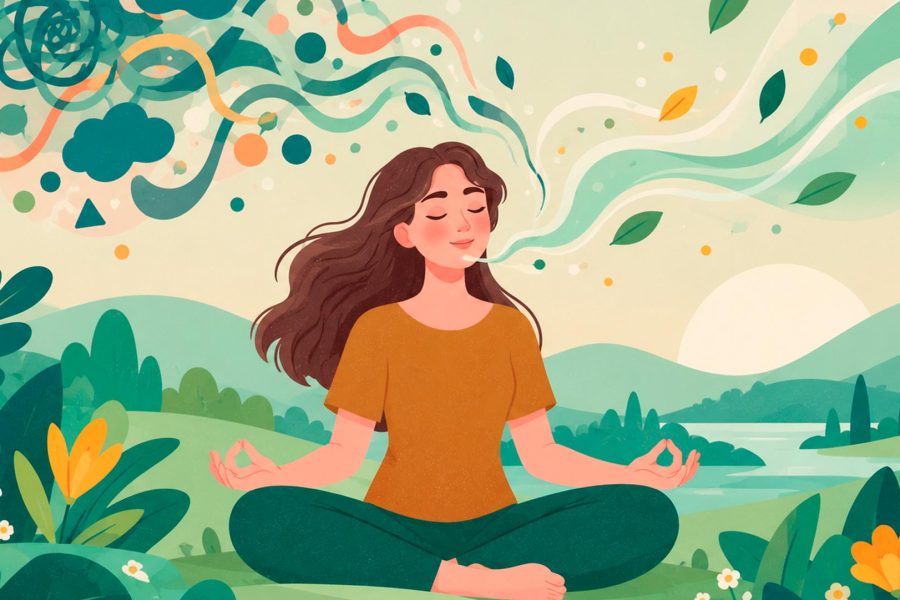
Mindfulness, or mindfulness meditation, helps develop the ability to focus completely on the present moment. The main task of these techniques is to observe what is happening here and now, without judgment. We follow our thoughts, emotions, and bodily sensations without trying to change them. Mindfulness practice helps reduce anxiety and overall stress levels, improve concentration, and achieve inner balance.
Concentration meditation (on breathing, mantra, sound)
A classic technique that involves consciously focusing your attention on a single object. This can be your own breathing, a meditation sound, or a mantra. The main task is to immerse yourself in a state of deep concentration and reduce the number of thoughts. People who regularly practice concentration meditation are better at maintaining their attention and achieve calm more quickly, even in stressful situations.
Meditation of love and kindness (metameditation)
Metameditation is a practice aimed at developing positive feelings towards oneself and the world. During the practice, we focus on gratitude, kindness, and compassion. These feelings help us feel inner warmth, reduce the level of “negative” emotions, and focus on the good. During the practice, we consciously repeat phrases expressing wishes for happiness and peace. A distinctive feature of this practice is its ability to strengthen emotional stability, reduce anger and resentment, and form a deep inner connection with ourselves and the world.
Body scan meditation
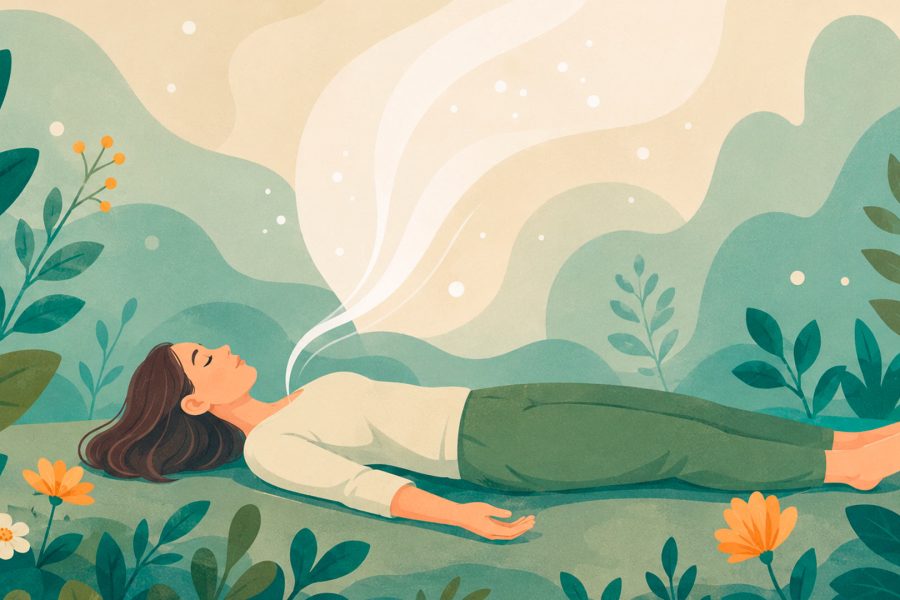
This is a physical and psychological practice that helps achieve a state of deep relaxation. The technique teaches you to focus on physical sensations, helps relax tense areas of the body, and frees you from intrusive thoughts. During the practice, you need to direct your attention to different areas, moving from your feet to the top of your head. The practice strengthens the connection between the physical and mental, develops awareness of your own sensations.

Visualization Meditation
Visualization meditation is a technique of creating images in your mind and focusing on them. Such mental images promote calmness, inspire, and boost self-confidence. The essence of the practice is to imagine yourself in a pleasant place or situation that will help you achieve the desired state. The technique reduces stress and helps to build and maintain motivation. The human brain does not distinguish between real and imaginary situations. Therefore, new neural connections are formed through practice.
Walking meditation
Walking meditation is the practice of conscious movement. During the practice, attention is focused on each step, sensations in the body, and contact with the ground. The technique aims to combine the physical and mental, reducing anxiety. Regular practice strengthens contact with the world, calms, and promotes inner harmony. This dynamic technique is accessible to everyone and can be practiced anywhere.
Transcendental meditation
Transcendental meditation is one of the most powerful practices for achieving a state of pure consciousness. It helps to go beyond thinking through the repeated recitation of mantras. The technique has proven highly effective in improving sleep and reducing anxiety. Regular practice improves well-being and increases stress resistance.
Our brain is capable of learning at any age. Regular performance of certain actions contributes to changes at the neurophysiological level. New neural connections are formed in the brain, which manifest themselves in the form of new skills. Meditation practices trigger the processes of such neuroplasticity.
Regular practice of techniques contributes to an increase in the volume of gray matter, which is responsible for concentration and memory. Studies have also shown that meditation affects the activity of the prefrontal cortex, hippocampus, and amygdala. Thanks to this, we worry less and cope better with stress.
Positive neurophysiological changes improve cognitive function, attention, and memory. In everyday life, this manifests itself in improved productivity and the ability to work with diverse and complex tasks.
The basis for lasting and pronounced effects from meditation is regularity. It is better to practice for a short time every day than to engage in long, unsystematic practices. Regular meditation has been proven to lead to a whole range of positive changes on the cognitive, emotional, and physical levels. After just a few weeks of systematic meditation, you can notice significant improvements in your mood and well-being.
The effects will vary depending on the type of meditation you choose. However, most techniques are characterized by results such as:
Regular practice helps to achieve inner harmony and increases energy levels throughout the day.
I improve my mental state:
Starting to meditate is easier than it seems. Choose a quiet place where no one will disturb you. Get into a comfortable position with your back straight and close your eyes. This will be the beginning of your practice. In the early stages, 10-15 minutes is enough. Over time, the duration of the sessions can be increased.
Integrate your chosen meditations into your routine and try to do them at the same time every day. This will help you gradually feel positive changes. Over time, meditation will become an integral part of your day and will help you maintain calmness and clarity of mind.
Don’t try to do everything perfectly the first time. Choose practices that suit your needs in our app and take small steps. And don’t worry if you can’t achieve long-term concentration. As you gain experience, it will become easier for you to concentrate and immerse yourself in the desired states.
Can I start meditating on my own without an instructor?
Yes, you don’t need an instructor to start meditating. However, it is important to find a reliable source of information that describes various meditation techniques in detail. Choose yours in our app and follow the recommendations.
What posture should I take during meditation?
There are various positions for meditation: sitting, lying down, standing, and even moving. Choose a position based on the technique you plan to use and your personal preferences. The main condition is that you should be comfortable and your back should remain straight.
How long do I need to meditate to feel the effects?
The first effects can be felt after 10-15 minutes of practice, but for lasting changes, regular practice is required for several weeks.
How will I know if I am meditating correctly?
There is no “right” or “wrong” way to meditate. It is important to be attentive to yourself and notice changes on the physical, emotional, and cognitive levels. If you feel relaxed and clear-headed, you are on the right track.